Biomedical engineering, data science, and responsible AI

Raha Dastgheyb

Biomedical Engineer Translational Data Scientist Computational Neuroscientist Scientific Software Builder Reproducible Systems Architect
Assistant Professor of Neurology Division of Neuroimmunology Johns Hopkins School of Medicine

Building computational tools that transform complex biomedical data into scientific insight through reproducible analytics, open-source scientific software, and human-in-the-loop AI-assisted discovery.

Portrait of Raha Dastgheyb
Biomedical data science · reproducible research · responsible AI
Overall Positioning

The bottleneck is no longer data generation. The bottleneck is discovery.

Modern biomedical research can generate thousands of clinical, imaging, molecular, behavioral, and omics measurements from a single study. This research program builds computational infrastructure that helps teams explore complex datasets, interpret findings, and generate biologically meaningful hypotheses while maintaining scientific rigor.

Pillar 1

Computational Discovery

Machine learning, multimodal integration, disease subtyping, longitudinal prediction, and biomarker discovery for complex biomedical datasets.

Pillar 2

Scientific Software Infrastructure

Open-source software that translates published methods into reproducible analytical workflows, reports, and reusable research systems.

Pillar 3

Responsible AI-Assisted Science

Human-in-the-loop AI, conversational data exploration, scientific reasoning, and transparent workflows that help scientists think more effectively.

Methods and Toolchain

Scientific capabilities for finding hidden structure in biomedical data.

Reproducible analytics

Statistical workflows, reports, visualization, and open-source biomedical data science.

Biomedical applications

MathWorks MATLAB app development for signal processing, GUI tools, and quantitative neuroscience.

Machine learning

Clustering, dimensionality reduction, prediction, and interpretable biomarker discovery.

Data visualization

Interactive figures and reports that help scientists inspect multidimensional evidence.

GUI development

Apps and dashboards that make complex workflows usable by interdisciplinary teams.

Multi-omics

Integrated molecular, imaging, clinical, cognitive, and behavioral analysis workflows.

Digital phenotyping

Wearables, tablet-based neuropsychology, actigraphy, and longitudinal signal streams.

Scientific software

Open-source research infrastructure that makes methods reusable and auditable.

Scientific Identity

Research at the intersection of engineering, data science, and neuroscience.

Biomedical engineering and computer science training anchor a translational program that turns complex biomedical data into actionable insight for collaborators, cohorts, and grant-funded scientific teams.

Biomedical Engineer

Bringing engineering design, quantitative neuroscience, and computational biology to translational brain health research.

Translational Data Scientist

Using machine learning, statistics, networks, and data visualization to reveal meaningful cognitive, clinical, and biomarker phenotypes.

Scientific Software Builder

Building open-source software, dashboards, and reporting systems that make methods reproducible, transparent, and accessible.

Living Systems

Active research infrastructure, publications, talks, and tools in motion.

A current layer of scientific momentum connecting software systems, computational phenotyping, biomedical data science, translational brain health, responsible AI-assisted discovery, and field-building work.

Featured Systems

Open-source software as scientific infrastructure.

These systems are positioned as research outputs: reusable, inspectable, and designed to turn complex biomedical data into reproducible scientific insight, from quality control to biomarker analysis to AI-assisted discovery.

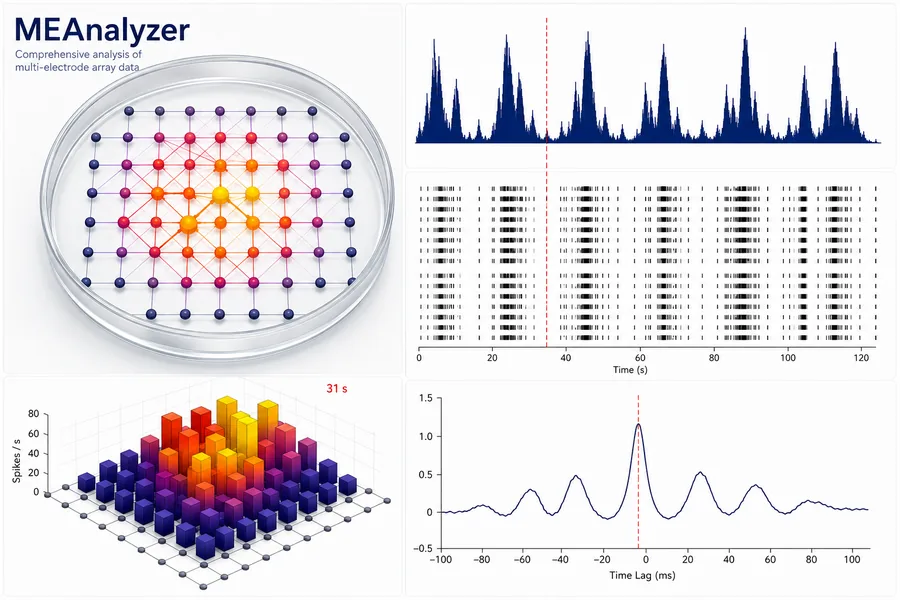
Published, citable MATLAB app for multi-electrode array analysis.

MEAnalyzer

A downloadable point-and-click tool for spike-train statistics, burst detection, functional connectivity, periodicity analysis, visualization, and provenance-aware exports.
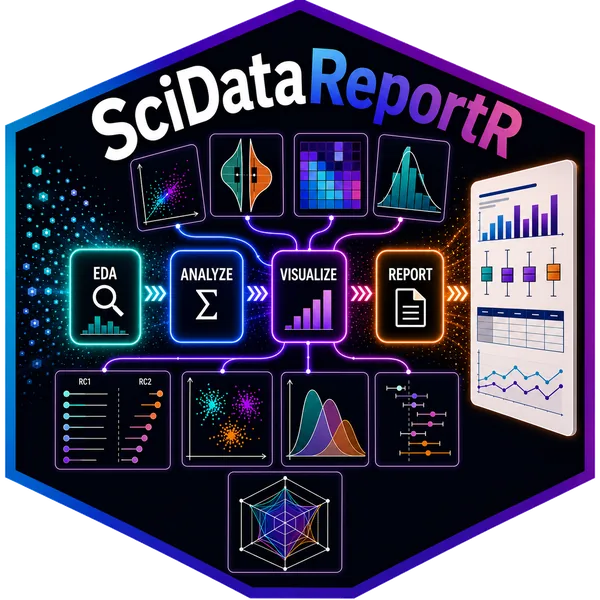
Open-source biomedical data analysis and reporting infrastructure.

SciDataReportR

Supports metadata-aware QC, statistical workflows, biomarker analysis, visualization, and reproducible scientific reasoning.
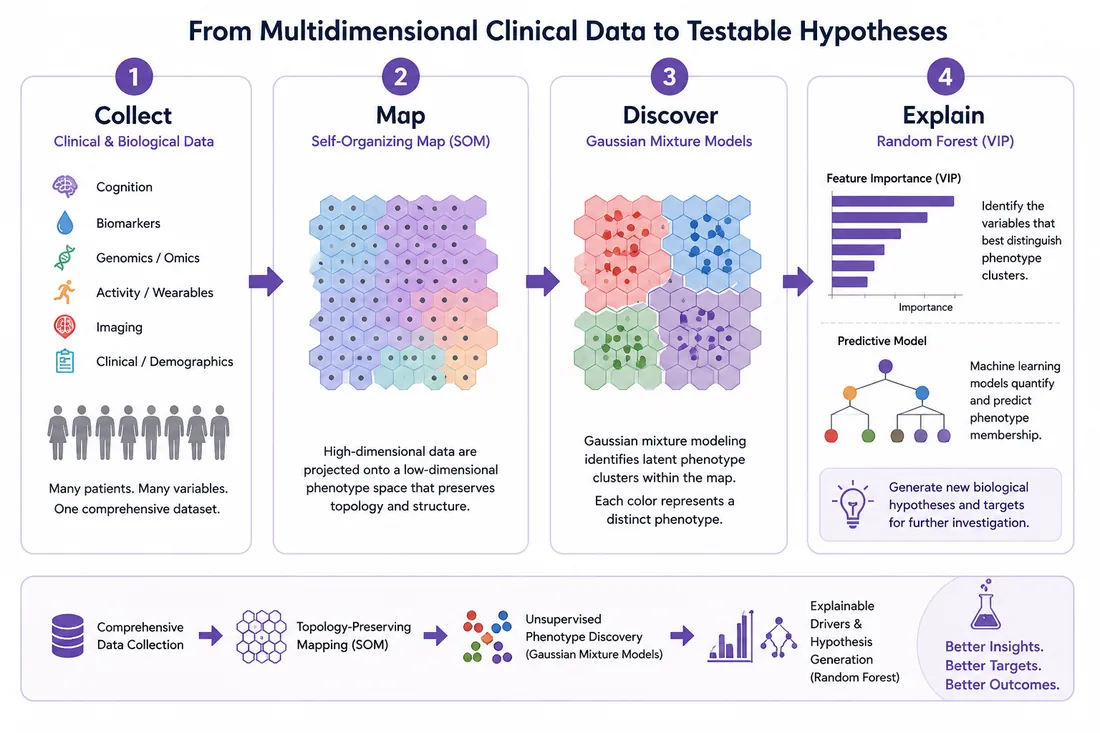
Reveals latent cognitive and biomarker patterns across heterogeneous cohorts.

Computational Phenotyping Pipelines

Moves beyond average effects toward clinically and biologically interpretable hidden structure.
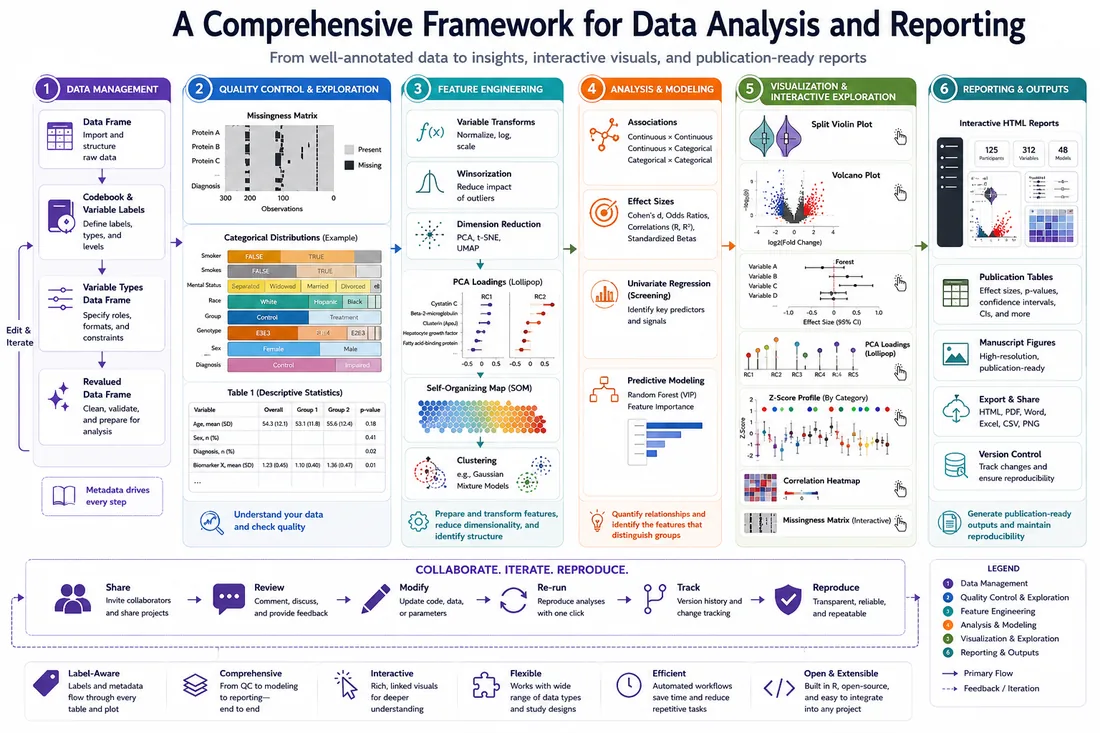
Converts analysis outputs into decision-ready scientific interfaces.

Dashboards and Reporting Frameworks

Makes reproducible research outputs inspectable, shareable, and extensible.

In-development proteomics reporting workflows for multi-omics discovery.

ProteomicsReportR

Designed to turn high-dimensional proteomics analyses into transparent QC, biomarker discovery, clustering, and interpretation reports.

In-development metabolomics reporting for biomedical discovery.

MetabolomicsReportR

Designed for reproducible metabolomics reports that connect multi-omics measurements with statistical workflows and biological interpretation.

In-development multiplex biomarker reporting infrastructure.

MultiPlexReportR

Designed for transparent QC, visualization, and biomarker discovery in multiplex translational studies.

Conceptual in-development human-in-the-loop AI reasoning layer.

SciDataAgent

Frames conversational data exploration, transparent assumptions, and reproducible analysis planning as future scientific infrastructure.

Research Architecture

An interconnected research ecosystem for translational discovery.

The research architecture connects hidden structure in complex biomedical data to scientific infrastructure, translational science, biomarkers, multi-omics, visualization, reproducibility, people, and impact.

discovers subgroups connects evidence reveals mechanisms builds reusable tools integrates cohorts enables reproducibility Central system Reproducible Infrastructure Transparent workflows, reusable methods, and scientific software that make discovery auditable. Hidden structure Computational Phenotyping Finds interpretable subgroups, trajectories, and cognitive profiles. Evidence layer Scientific Visualization Makes multidimensional findings inspectable by collaborators. Mechanisms Biomarker Systems Links molecular signals, multi-omics, and clinical brain health questions. Reusable tools Software Systems Turns analytical methods into maintained scientific infrastructure. Cohort translation Translational Neuroinformatics Connects cohorts, cognition, biomarkers, and brain health translation.
Selected Publications

Highlighted papers as research portals.

Figure from BRACE-ing for the future: Establishing iPad-based norms for cognitive function in the MACS/WIHS Combined Cohort Study (Preprint)
2025 article highlighted

BRACE-ing for the future: Establishing iPad-based norms for cognitive function in the MACS/WIHS Combined Cohort Study (Preprint)

Rubin, Leah et al.

JMIR mental health

Establishes regression-based iPad cognitive norms for BRACE in the MACS/WIHS Combined Cohort Study.
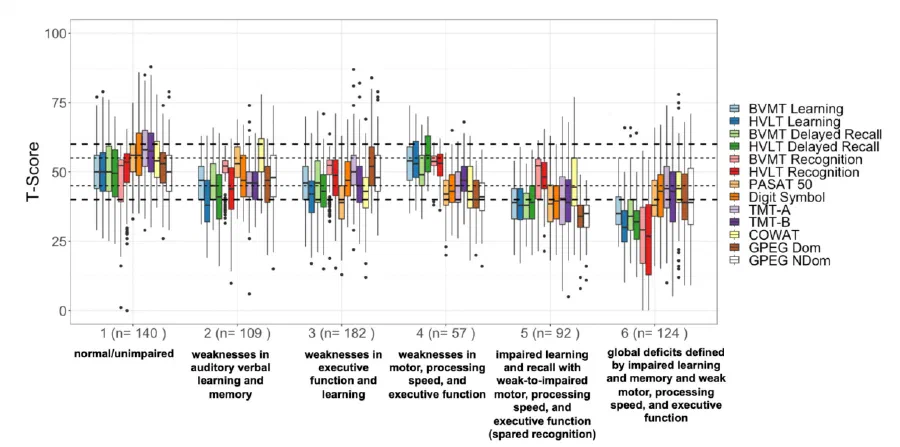
Publication preview for Identifying and distinguishing cognitive profiles among virally suppressed people with HIV.
2024 article highlighted

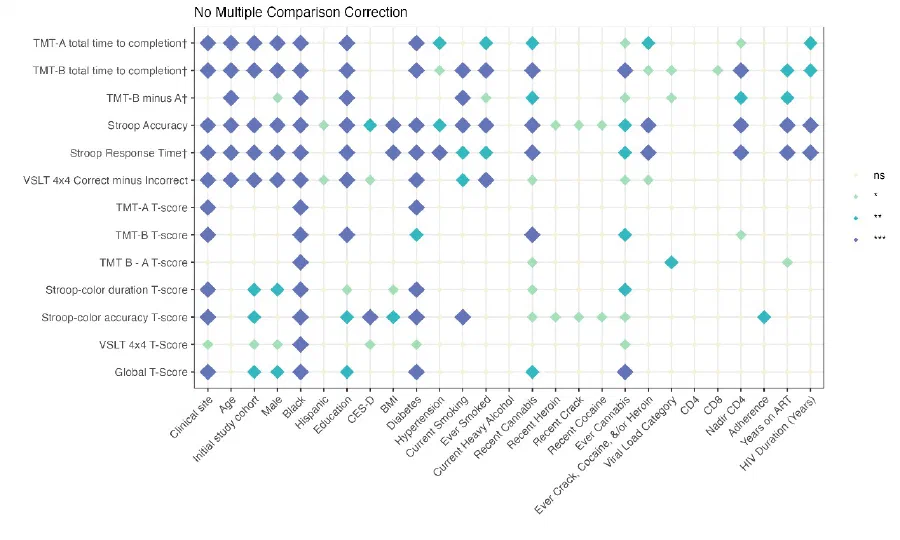
Identifying and distinguishing cognitive profiles among virally suppressed people with HIV.

Sundermann, Erin E et al.

Neuropsychology

Identifies six cognitive profiles among virally suppressed people with HIV and the factors that distinguish them.
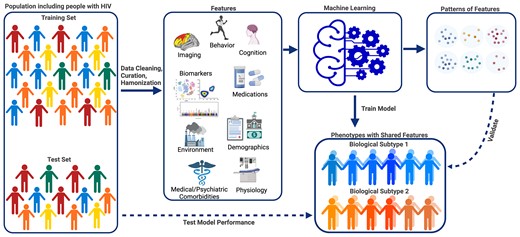
Figure from Machine learning approaches to understand cognitive phenotypes in people with HIV
2023 article highlighted

Machine learning approaches to understand cognitive phenotypes in people with HIV

Mukerji, Shibani S et al.

The Journal of infectious diseases

Frames machine learning as a tool for discovering cognitive biotypes in people with HIV.

Figure from MEAnalyzer-a spike train analysis tool for multi electrode arrays
2020 article highlighted

MEAnalyzer-a spike train analysis tool for multi electrode arrays

Dastgheyb, Raha M et al.

Neuroinformatics

Introduces MEAnalyzer as reproducible software for spike train analysis in multi-electrode array experiments.

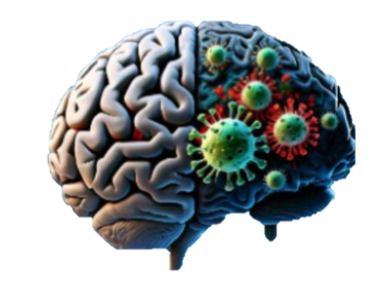
Figure from Blood-Brain barrier disruption in long COVID and cognitive correlates: A cross-sectional MRI study
2025 article highlighted

Blood-Brain barrier disruption in long COVID and cognitive correlates: A cross-sectional MRI study

Rubin, Leah H et al.

Brain, Behavior, and Immunity

Uses non-contrast MRI to study blood-brain barrier permeability and cognition in Long COVID.

Figure from The Baltimore declaration toward the exploration of organoid intelligence
2023 article highlighted

The Baltimore declaration toward the exploration of organoid intelligence

Hartung, Thomas et al.

Frontiers in Science

Defines organoid intelligence as an emerging discipline requiring technical, ethical, and community infrastructure.

Figure from Patterns and predictors of cognitive function among virally suppressed women with HIV
2021 article highlighted

Patterns and predictors of cognitive function among virally suppressed women with HIV

Dastgheyb, Raha M et al.

Frontiers in neurology

Uses self-organizing maps and random forests to characterize cognitive profiles in virally suppressed women with HIV.

Figure from Metabolomic levels mediate the link between socioeconomic factors and changes in declarative memory in women with and without HIV
2026 article highlighted

Metabolomic levels mediate the link between socioeconomic factors and changes in declarative memory in women with and without HIV

Tejera, C\'esar Higgins et al.

Brain, Behavior, & Immunity-Health

Links socioeconomic conditions, metabolomic profiles, and longitudinal declarative memory change in women with and without HIV.

Figure from Longitudinal effects of polypharmacy on cognitive function in people with HIV
2026 article highlighted

Longitudinal effects of polypharmacy on cognitive function in people with HIV

Korpela, Eero et al.

AIDS

Examines how polypharmacy relates to cognitive function over time in people with HIV.

Figure from Tryptophan-Kynurenine Pathway Activation and Cognition in Virally Suppressed Women With HIV
2024 article highlighted

Tryptophan-Kynurenine Pathway Activation and Cognition in Virally Suppressed Women With HIV

Shorer, Eran Frank et al.

JAIDS Journal of Acquired Immune Deficiency Syndromes

Studies whether tryptophan-kynurenine pathway activation is associated with cognition in virally suppressed women with HIV.

Roles & Affiliations

Leadership roles, institute affiliations, and collaborative infrastructure.

People

Mentorship, trainees, and collaborators extend the infrastructure.

Current trainees, former trainees, and collaborators make the scientific software, cohort analytics, and translational discovery ecosystem possible.

People
Future Directions

AI that helps scientists think more effectively.

The lab is extending reproducible computational science toward conversational data exploration, cross-domain biomedical integration, and SciDataAgent, an in-development AI reasoning layer for human-in-the-loop scientific discovery.

Human-in-the-loop AI

Scientific judgment stays central.

AI-assisted discovery should help researchers inspect evidence, surface assumptions, and reason transparently without replacing scientific expertise.

Conversational data exploration

Complex data should be explorable.

Researchers need interfaces that let them ask better questions of clinical, imaging, molecular, and omics datasets while preserving provenance.

Reproducible computational science

Discovery needs infrastructure.

Reports, workflows, dashboards, and open-source software make biomedical AI and machine learning results auditable, reusable, and easier to extend.

Cross-domain integration

Signals become insight together.

Clinical, biomarker, neuroimaging, behavioral, and multi-omics data become more powerful when integrated through transparent computational systems.

Contact

Collaborations, speaking invitations, trainee opportunities, software inquiries, and interdisciplinary research partnerships.

raha [at] jhmi [dot] edu

Open to collaborations, speaking invitations, trainee opportunities, software inquiries, and interdisciplinary research partnerships.