Long COVID has made neuropsychiatric symptoms clinically visible, but mechanisms remain difficult to measure. This paper evaluates blood-brain barrier permeability with a non-contrast MRI approach and relates those measurements to cognitive performance. The work matters because it links patient-reported neurological burden to a measurable brain-imaging biomarker that could be followed in future mechanistic or intervention studies.
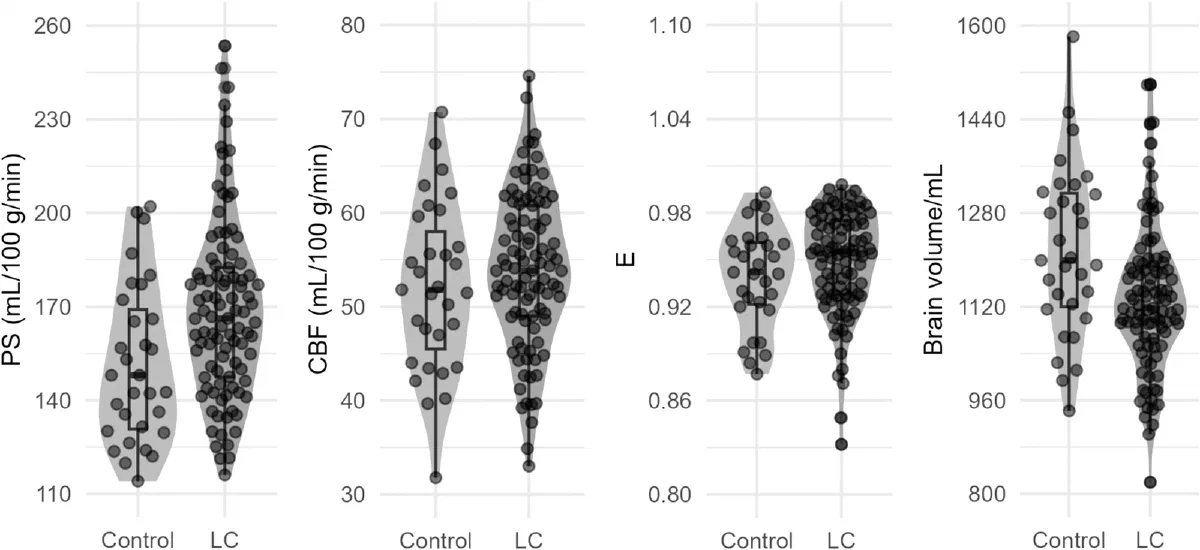
- The study compared 97 participants with Long COVID and neuropsychiatric symptoms with 31 recovered controls.
- Blood-brain barrier permeability was measured using WEPCAST MRI, a non-contrast method estimating the permeability-surface-area product of arterially labeled water entering the brain.
- Cognitive performance was summarized into eight factor scores using principal components analysis.
- The findings indicate subtle but persistent blood-brain barrier disruption more than two years after infection.
- The results suggest a possible relationship between barrier integrity and motor dysfunction, supporting further work on BBB measures as long-term biomarkers of neuropsychiatric complications.
This study asks whether Long COVID symptoms are associated with measurable changes in the blood-brain barrier, the system that helps regulate what enters the brain from the bloodstream. Using MRI rather than an injected contrast agent, the study found evidence of persistent barrier disruption in people with Long COVID. The results suggest one biological pathway that may help explain lasting neurological symptoms.