Why This Matters
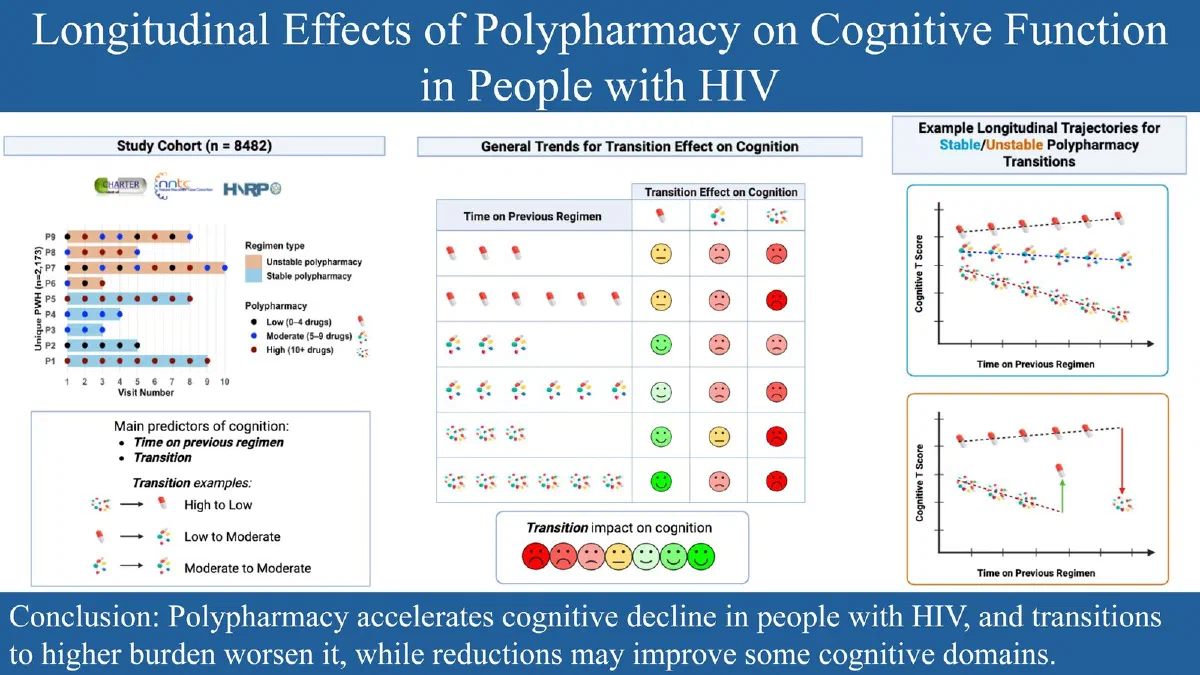
Polypharmacy is a practical clinical problem for people aging with HIV, where medication burden may intersect with comorbidities, viral history, and cognitive vulnerability. This paper belongs in the highlighted set because it turns medication exposure into a longitudinal cognitive risk question. The current local source content is limited, so the summary is intentionally conservative until the full abstract or PDF is added.
Key Findings
- The paper studies longitudinal relationships between polypharmacy and cognitive function in people with HIV.
- Its focus is clinically actionable: medication burden is a potentially modifiable exposure.
- The publication connects cognitive outcomes to real-world treatment complexity in aging and chronic HIV care.
- A full local PDF or complete abstract should be added before writing more detailed findings about model results, effect sizes, or specific cognitive domains.
Plain-Language Summary
People with HIV often manage multiple medications for HIV and other health conditions. This paper examines whether that medication burden is related to cognitive function over time. The available local metadata is not yet detailed enough to summarize the results beyond that central research question.