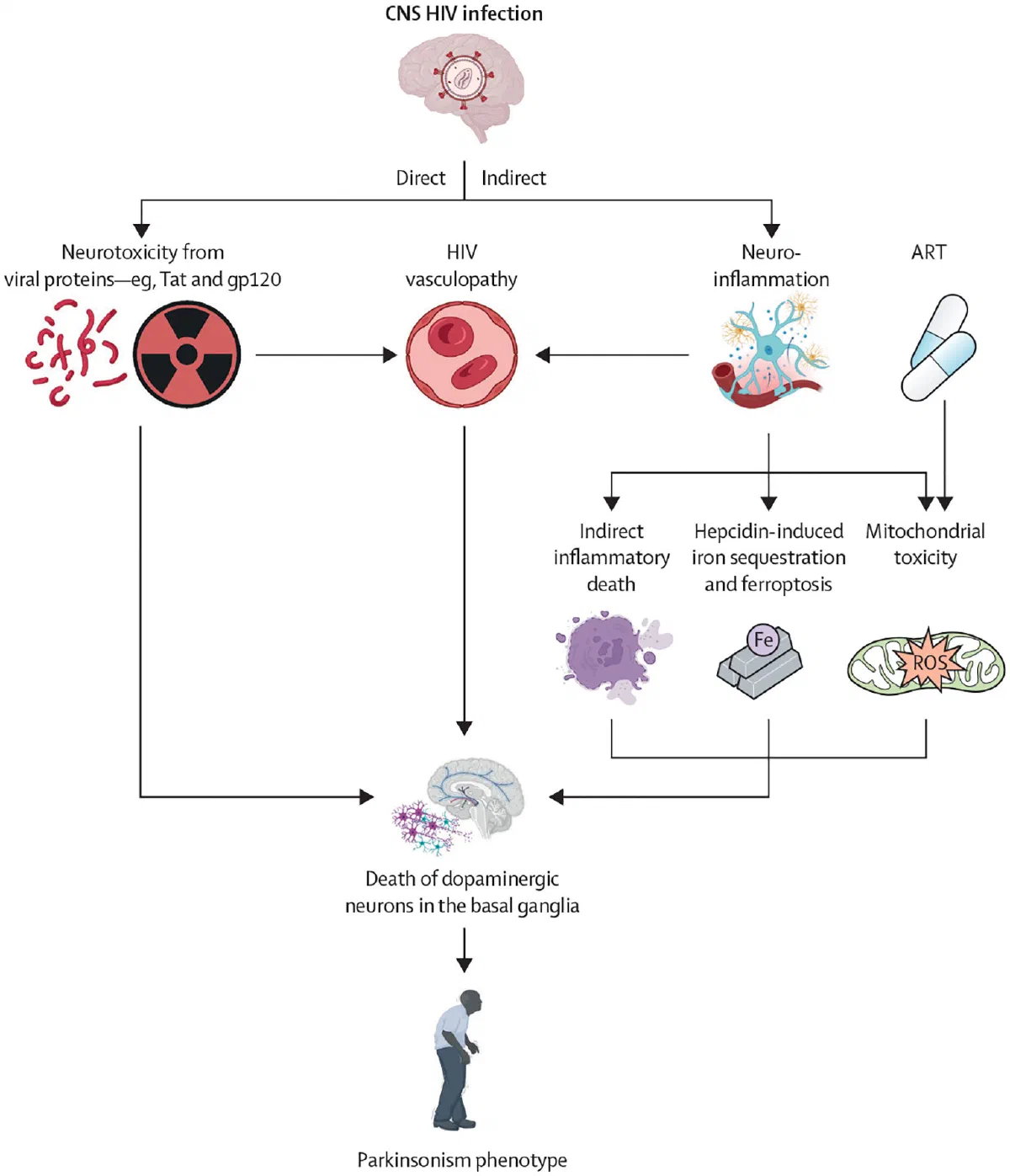
Parkinsonism is increasingly recognised in people who are ageing with virally suppressed HIV, with bradykinesia emerging earlier and more frequently than in idiopathic Parkinson’s disease. Despite effective antiretroviral therapy (ART), studies report persistent motor symptoms —such as motor slowing, postural instability, and symmetric postural tremor—and non-motor features, including sleep disturbance, cognitive decline, and autonomic dysfunction. Neuroimaging reveals basal ganglia atrophy, white matter hyperintensities, and reduced dopamine transporter activity, underscoring a pathophysiology distinct from idiopathic Parkinson’s disease. Proposed mechanisms include chronic neuroinflammation, cerebrovascular dysfunction, mitochondrial injury, disturbed iron metabolism, and possible ART-induced neurotoxicity, all contributing to basal ganglia dysfunction. Diagnosis is made complex by under-recognition, non-specific assessment tools, and comorbidities. Standardised rating scales, such as the Unified Parkinson’s
Publication
Parkinsonism in people with virally suppressed HIV
Abstract