Scientific Software

Biomarker Analytics Systems

Computational systems for connecting biomarker data to brain health outcomes.

Scientific problem Biomarker discovery requires integrating molecular, imaging, cognitive, behavioral, and clinical data streams without losing interpretability.
Why It Was Needed

Brain health studies need reproducible pipelines that can connect multi-omics and neuroimaging measurements to cognition, mental health, and disease trajectories across cohorts.

What It Enables

These systems support biomarker discovery, validation, visualization, and collaborative interpretation for neurodegeneration, HIV, Long COVID, aging, and sleep-related brain health questions.

Biomarker analytics systems connect molecular, clinical, cognitive, and behavioral data streams into interpretable research workflows.

Scientific Infrastructure

These systems support the biomarker cores and collaborative programs that require transparent joins across assays, imaging features, neuropsychological outcomes, and longitudinal clinical variables.

Scientific Story

The goal is not only to find significant markers. It is to build analytic infrastructure that helps teams understand which biological signals are robust, interpretable, and useful for translational brain health.
Connected Threads

Related Publications
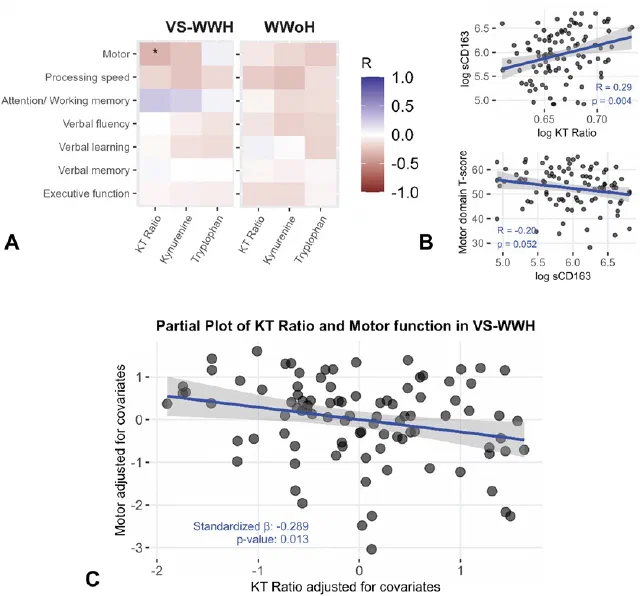
Figure from Tryptophan-Kynurenine Pathway Activation and Cognition in Virally Suppressed Women With HIV
2024 article highlighted

Tryptophan-Kynurenine Pathway Activation and Cognition in Virally Suppressed Women With HIV

Eran Frank Shorer, Raha M. Dastgheyb, Audrey L. French, Elizabeth Daubert, Ralph Morack, Tsion Yohannes, Clary Clish, Deborah Gustafson, Anjali Sharma, Andre Rogando, Qibin Qi, Helen Burgess, Leah H. Rubin, Kathleen M. Weber

JAIDS Journal of Acquired Immune Deficiency Syndromes

Studies whether tryptophan-kynurenine pathway activation is associated with cognition in virally suppressed women with HIV.

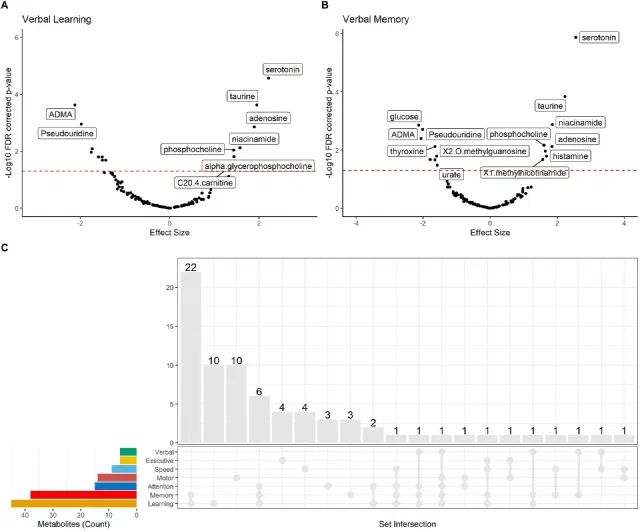
Figure from Metabolomic levels mediate the link between socioeconomic factors and changes in declarative memory in women with and without HIV
2026 article highlighted

Metabolomic levels mediate the link between socioeconomic factors and changes in declarative memory in women with and without HIV

César Higgins Tejera, Raha Dastgheyb, Eran F. Shorer, Susie Lee, Deborah Gustafson, Anjali Sharma, Gypsyamber D'Souza, Kathleen M. Weber, Qibin Qi, Leah H. Rubin, Kathryn C. Fitzgerald

Brain, Behavior, & Immunity-Health

Links socioeconomic conditions, metabolomic profiles, and longitudinal declarative memory change in women with and without HIV.

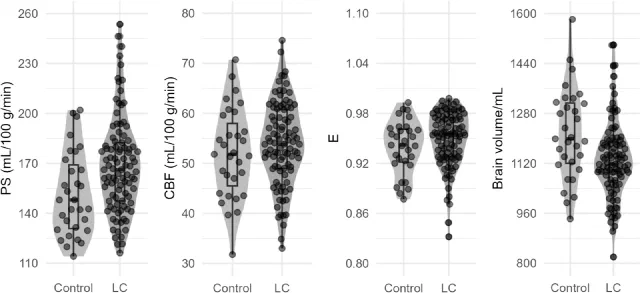
Figure from Blood-Brain barrier disruption in long COVID and cognitive correlates: A cross-sectional MRI study
2025 article highlighted

Blood-Brain barrier disruption in long COVID and cognitive correlates: A cross-sectional MRI study

Leah H. Rubin, Wen Shi, Alba Azola, Aparna Bhattacharyya, Raha M. Dastgheyb, Jiani Wu, Christina Della Penna, Hannah Parker, Isabel Santiuste, Ana Ehrenspeck, Jennifer M. Coughlin, Tracy D. Vannorsdall, Hanzhang Lu, Rebecca Veenhuis

Brain, Behavior, and Immunity

Uses non-contrast MRI to study blood-brain barrier permeability and cognition in Long COVID.

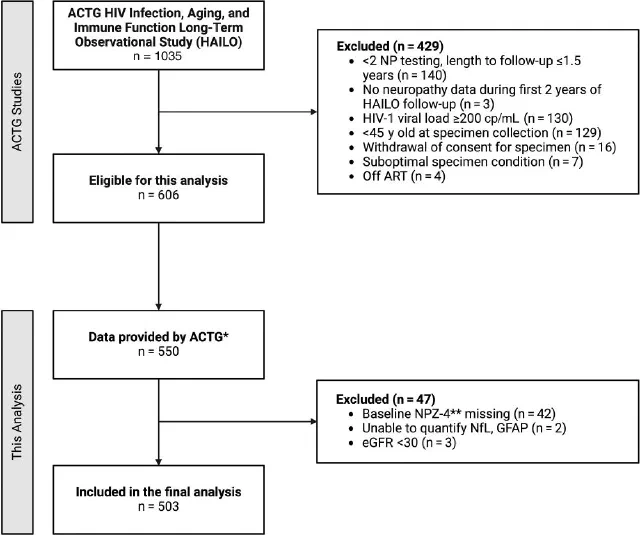
Figure from Plasma neurofilament light chain and glial fibrillary acidic protein as biomarkers of cognitive decline in people with human immunodeficiency virus
2025 article selected

Plasma neurofilament light chain and glial fibrillary acidic protein as biomarkers of cognitive decline in people with human immunodeficiency virus

Shibani S. Mukerji, Petra Bachanová, Hemi Park, Linzy V. Rosen, Rommi Kashlan, Pia Kivisäkk, Albert M. Anderson, Felicia C. Chow, Kunling Wu, Raha M. Dastgheyb, Leah H. Rubin, Katherine Tassiopoulos, Robert A. Parker, Emily P. Hyle

The Journal of Infectious Diseases

This paper helps define a research thread in translational brain health research, providing context for how computational and translational evidence can be organized into reusable scientific systems.